
LionFish
Variable-Sweep Hybrid-Electric Group 3 UAS · Coordinated Signature-Control Mission System
USPTO Provisional #64/066,076 (Option A, filed 14 May 2026) · USPTO Provisional #64/065,196 (LionFish AUAV, filed 14 May 2026)
Autonomous Group 3 Decoy & EW Platform
LionFish is Edison's Group 3 hybrid-electric autonomous aircraft built for the contested electromagnetic environment. Two complementary patents — one covering deployable signature-control elements and coordinated apparent-target profiles (USPTO #64/065,196), the other covering variable-sweep triangular wings and series hybrid propulsion (USPTO #64/066,076) — together define an aircraft that can dash at 250 knots, recover to a short field on low-sweep wings, and operate in constellations of 50-500 platforms.
While the UNCV provides the unmanned naval combat surface platform and SeaWatch covers the ground-effect maritime mission, LionFish delivers the aerial decoy / ISR-relay / EW node of Edison's multi-domain defense ecosystem — a low-cost, high-survivability aircraft whose unit economics (qty-100 target $325K) make it a strategic force multiplier against adversary attritable platforms.
Variable-Sweep Wing Architecture
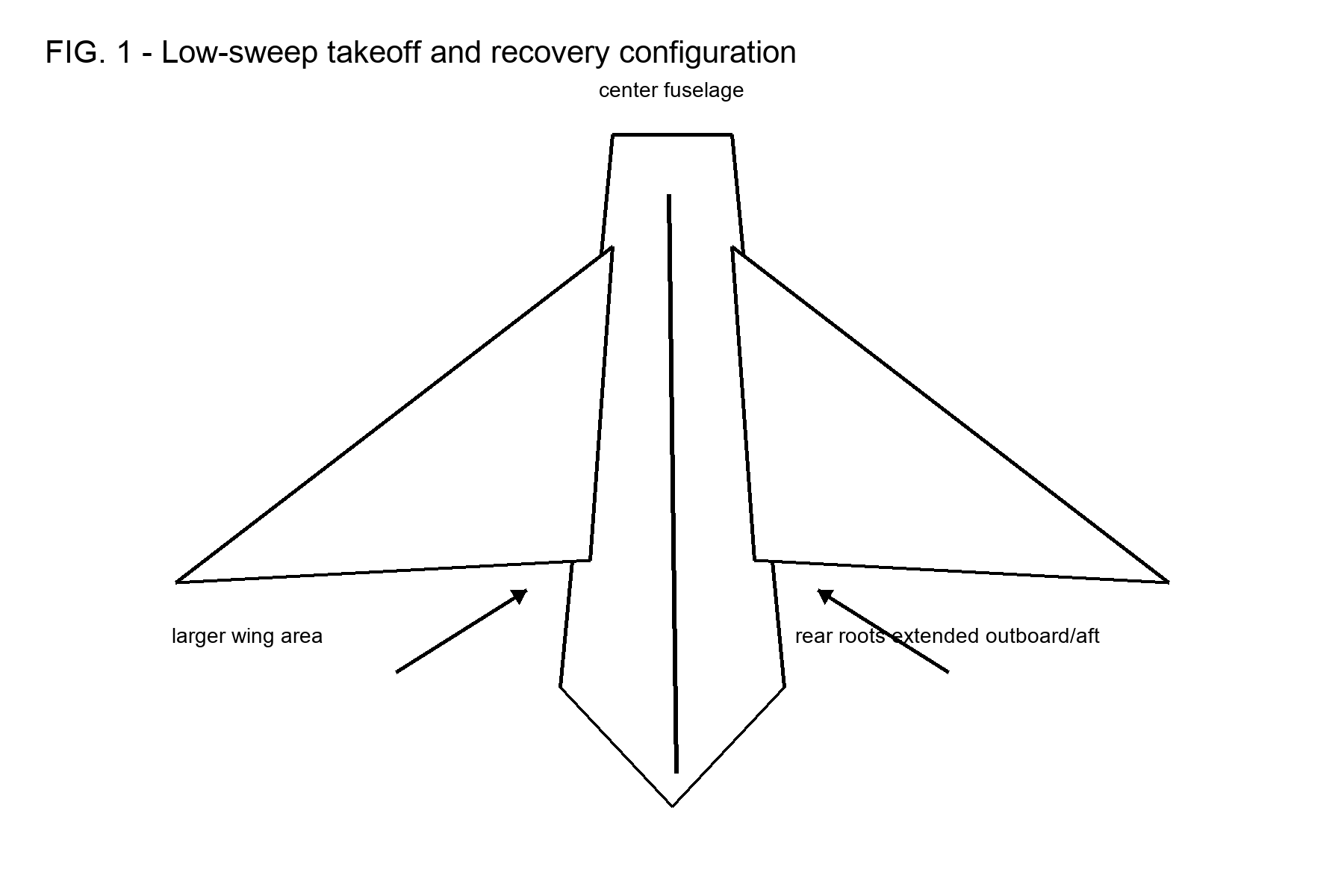
Low-Sweep — Takeoff & Recovery
Larger wing area · rear roots extended outboard/aft · STOL operations
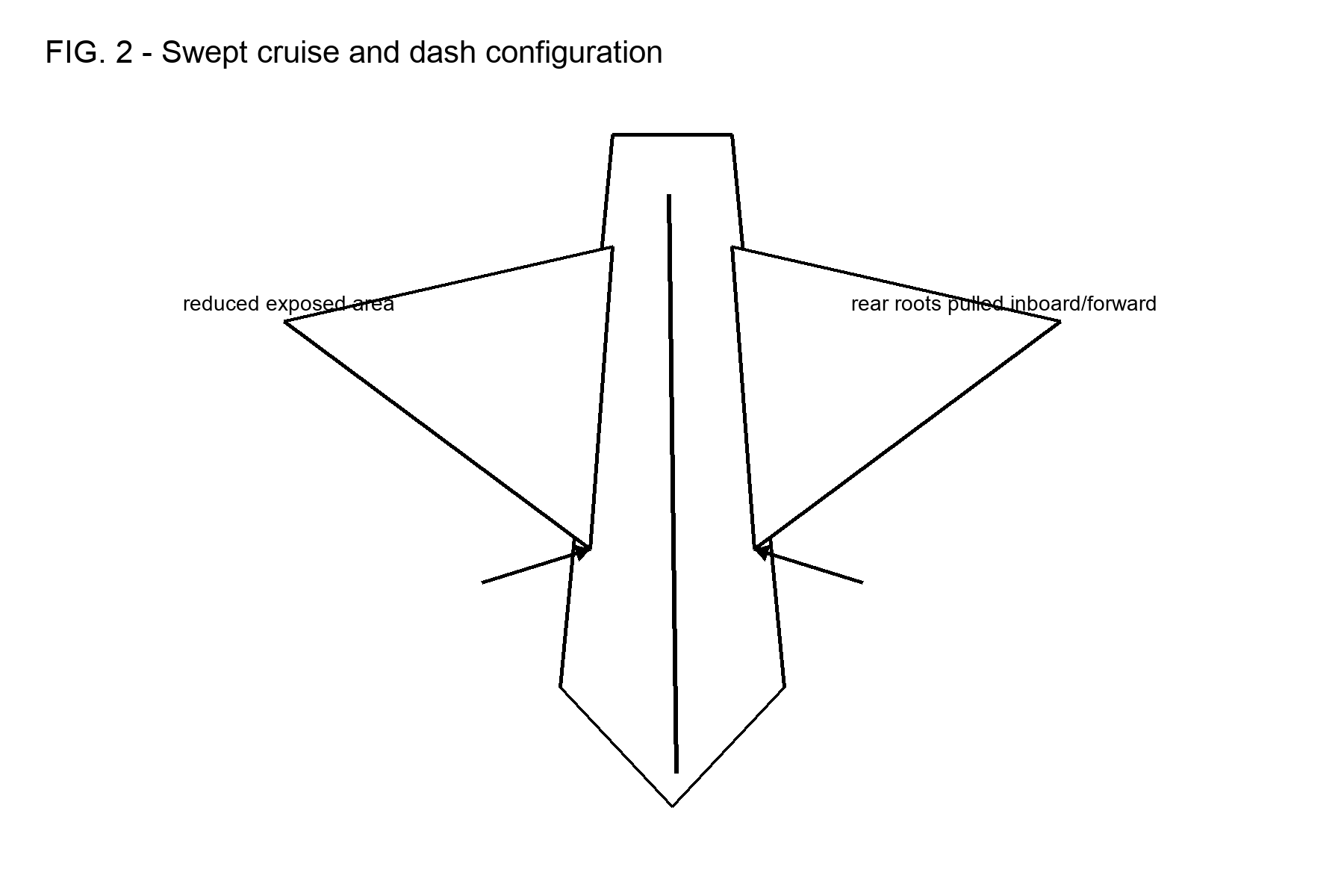
High-Sweep — 250-knot Dash
Reduced wing area · roots translated inboard/forward · supersonic-class drag profile
Fixed forward pivots + rear sliding root tracks · mechanically synchronized central actuator · flight-load-carrying locks · single mechanism enables both efficient cruise and high-speed dash (USPTO Provisional #64/066,076)
Technical Specifications
Two Variants — Option A & Option B
| Option A — Group 3 Hybrid-Electric (NEW) | Option B — Group 2 All-Electric mini (Heavy 1-derived) | |
|---|---|---|
| Class | Group 3 — high-speed hybrid-electric | Group 2 — all-electric mini-Heavy 1 derivative |
| Gross Takeoff Weight | 1,300 lbs | 55 lbs |
| Maximum Payload | 50 nominal lbs (25-75 lbs target class) | 18 lbs |
| Endurance at Full Payload | 1.5 hrs target at efficient cruise | 2.5 hrs target |
| Operational Ceiling | 18,000 ft MSL | 12,000 ft MSL |
| Maximum Dash Speed | 250 knots / 422 ft/s | ~100 knots / 169 ft/s |
| Powertrain | Series Hybrid: 32-35 kWh battery + 55-60 kW altitude-capable generator (900-1,350 cc engine class, 67-82 kW brake); 540-650 VDC system, 140-160 kW peak | All-electric: 48 V / 6 kW pack, LiFePO4 |
| Energy Storage | 32-35 kWh battery + 10-12 gallons JP-8 | LiFePO4 distributed pack |
| Constellation Scale | 50-100 platforms target; 500-platform objective architecture (same Edison constellation software across both) | |
| Autonomy | DARPA Level 4 — Mission Graph Executor, Multi-Agent Allocator (Edison-original, developmental TRL 2-3) | |
| Unit Cost (qty 100) | $325,000 target | $45,000 target |
| Wing Architecture (Option A) | Variable-sweep triangular wings — fixed forward pivot + rear sliding root track on each wing, mechanically synchronized central actuator with flight-load-carrying locks. Low-sweep configuration for short takeoff/recovery (larger wing area). High-sweep configuration for 250-kt dash (reduced drag). Single-actuator or dual-synchronized actuator options. | |
| Mission Profile | Long-range high-altitude decoy, ISR relay, EW; hybrid powertrain + variable-sweep wings enable both 250-kt dash and efficient cruise | High-density swarm, short-range decoy spread, edge-launched mesh |
| Signature | Quiet electric cruise / hybrid dash; eSTOL <150 ft footprint | Quiet all-electric throughout; minimal thermal |
| Patents (USPTO Provisional) |
#64/066,076 — Option A Hybrid-Electric Variable-Sweep UAS with Coordinated Signature-Control Mission System (filed 14 May 2026, 22:16 ET) — covers the variable-sweep triangular wing architecture, fixed forward pivot + rear sliding root track, synchronized actuator + mechanical lock, hybrid-electric Group 3 propulsion sizing. #64/065,196 — LionFish AUAV with Deployable Signature-Control Elements and Coordinated Apparent Target Profiles (filed 14 May 2026, 00:16 ET) — covers deployable signature-control elements, apparent target profile management, coordinated decoy behavior, mission graphs. | |
Mission Profiles
Decoy / RF Spoofer
Programmable RF emitter + signature emulator. Wide forward-arc constellation with edge-computed signature assignment; gap-fill on attrition in under 2 seconds.
Electronic Warfare Node
Software-defined radio with jammer module. Cognitive radio baseline detects and avoids occupied bands; LPI/LPD frequency-hopping spread spectrum.
ISR Relay
EO/IR ball + low-bandwidth mesh radio. Gossip-protocol-mediated coverage hand-off; overlapping sensor footprints with self-selecting replacements.
Forward Scout
Multispectral imager + edge inference compute. Jetson-class onboard processing — no continuous ground link required.
Key Advantages
Low Signature
Electric propulsion produces minimal acoustic and thermal signature, making the LionFish inherently harder to detect by enemy sensors and air defenses.
No Pilot at Risk
Operate in contested airspace without risking human lives. The unmanned platform can execute high-risk missions that would be unacceptable for manned aircraft.
STOL Deployment
Recovers to short unprepared fields on low-sweep wings — an eSTOL footprint under 150 ft — with no dependence on intact runways.
Expendable Economics
Lower cost per unit than manned platforms enables attritable operations. Deploy as expendable assets in high-threat environments where platform loss is acceptable.
Battle Damage Tolerance
Distributed hybrid-electric propulsion and constellation self-healing — attrition gaps are refilled in under 2 seconds — keep the mission running after platform losses.
Multi-Domain Integration
Seamless integration with UNCV and SeaWatch for coordinated air, sea, and surface-effect operations across the full battlespace.
Multi-Domain Defense Ecosystem
The LionFish integrates with Edison Aerospace's complete defense platform to deliver coordinated multi-domain capability across air, sea, and surface-effect operations.
UNCV -- Maritime Operations
The Unmanned Naval Combat Vessel handles maritime domain operations including autonomous naval patrol, mine countermeasures, and anti-submarine warfare. Learn more about UNCV
SeaWatch -- Surface-Effect Operations
The SeaWatch provides high-speed surface-effect transport and strike capability, operating in the gap between air and sea. Learn more about SeaWatch
Ground Control Station -- C2
Unified command and control across all Edison defense platforms from a single operator console. Learn more about GCS
Discuss the LionFish Program
Learn how the LionFish constellation can integrate into your operational framework with multi-domain unmanned capability.