UNCV
Unmanned Naval Combat Vehicle
UNCV Overview
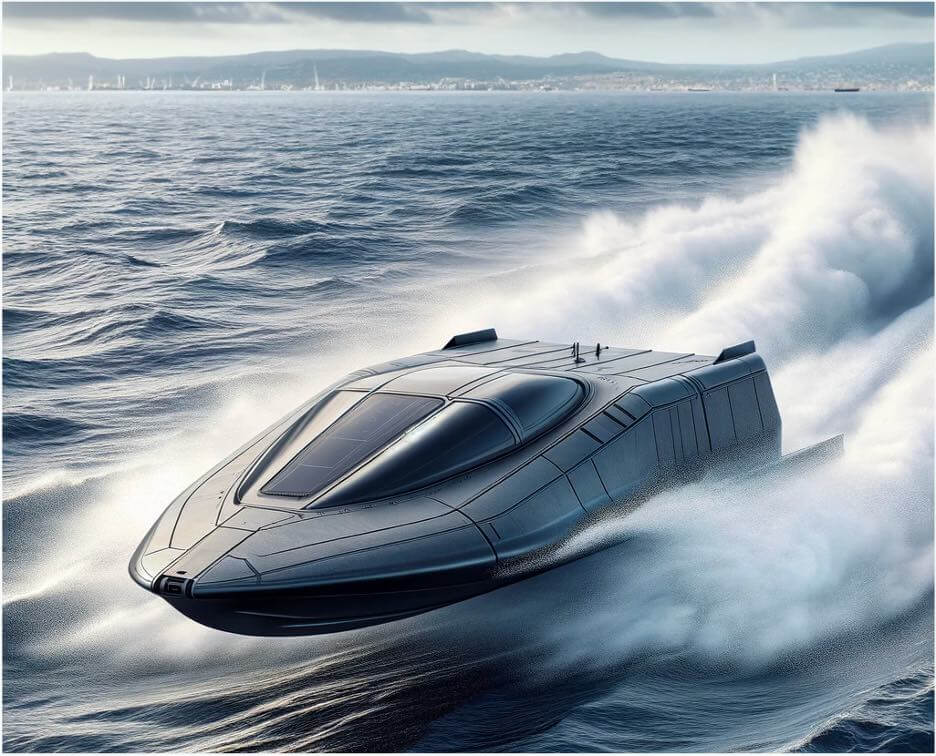
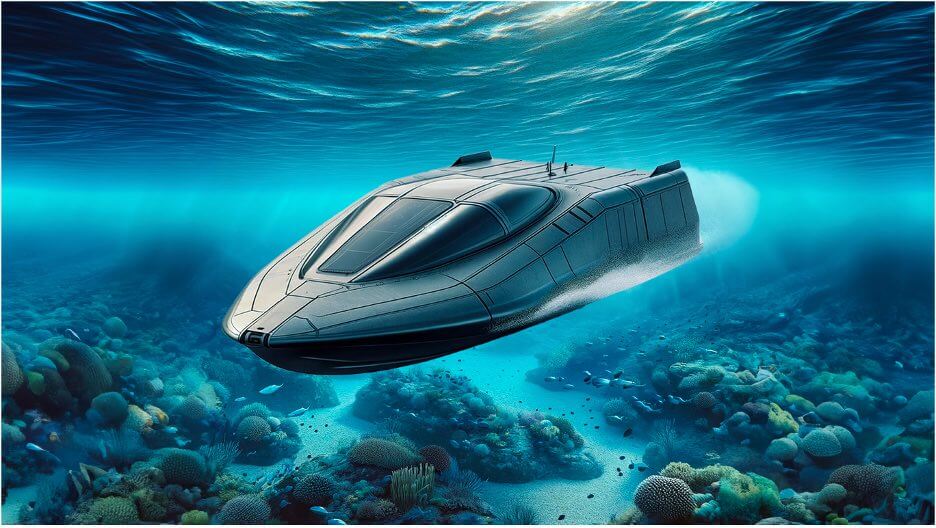
The UNCV (Unmanned Naval Combat Vehicle) is Edison Aerospace's autonomous, multi-role maritime platform, combining a fast surface craft with a slow-speed underwater submersible. Its multi-modal powertrain uses internal combustion propulsion on the surface and electric-only propulsion underwater. Depending on mission configuration, the UNCV is a munition, a sensor platform, or an intelligence, surveillance, and reconnaissance (ISR) platform, with additional roles in patrol, logistics, and anti-submarine warfare support. Underwater, it can form part of a smart naval minefield: a movable minefield in which each mine is a smart vehicle that acts autonomously to complete its assigned mission within commander-defined limits.
Maritime Capabilities
Surface Operations -- High Speed
Internal combustion propulsion powers high-speed surface transit for patrol, ISR, logistics, and repositioning between mission areas. The uncrewed platform is designed to support distributed maritime operations in coastal and open-water environments, with mission configuration determined by operational requirements.
- High-speed coastal patrol and surveillance
- Port security and harbor defense
- Surface interdiction and inspection at speed
- Rapid cargo and supply delivery
- Force protection for naval assets
Subsurface Operations -- Slow & Stealthy
Underwater, the UNCV uses electric-only propulsion for slow-speed missions with a reduced propulsion noise signature. Mission roles include sensing, ISR, and service as an autonomous munition within a mobile smart naval minefield. Each vehicle can reposition and execute its assigned mission within authorized operational limits.
- Mobile smart naval minefield missions
- Anti-submarine warfare support
- Underwater ISR and seabed mapping
- Mission-configured underwater sensing
- Subsurface threat identification
Sensor & ISR Platform
Configured as a sensor or ISR platform, the UNCV is designed to collect maritime information and support situational awareness above and below the surface. Mission duration and data availability depend on payload, energy reserves, operating conditions, and communications.
- Persistent maritime domain awareness
- Sensor reporting to command when communications permit
- Autonomous patrol patterns and route planning
- Environmental and hydrographic data collection
Munition & Distributed Operations
Configured as a munition, the UNCV provides an autonomous maritime combat role, including participation in a mobile smart naval minefield. The broader development approach emphasizes distributed operations, mission flexibility, and interoperability with naval command systems and Edison's aerial platforms.
- Autonomous munition and mobile minefield roles
- Integration with Heavy 1 Defense aerial platform
- Integration with SeaWatch ground-effect aircraft
- Networked maritime defense architecture
Key Advantages
The UNCV combines a multi-modal powertrain with mission-configurable roles. Development priorities include interoperability, scalable production, and autonomy that preserves appropriate human judgment over the use of force.
Electric-Only Underwater Propulsion
Electric-only underwater propulsion is intended to reduce propulsion noise during subsurface sensing, ISR, and munition missions.
Autonomous Navigation
Autonomous navigation and mission execution are designed to operate within commander-defined parameters, with appropriate human judgment over the use of force.
Reduced Crew Exposure
Uncrewed operation reduces the need to place personnel aboard a vessel conducting hazardous maritime missions.
Multi-Modal Powertrain
Internal combustion propulsion supports surface transit; electric-only propulsion supports underwater missions. Sustainment planning accounts for both fuel and electrical energy requirements.
Mission Flexibility
Munition, sensor, and ISR configurations support different mission needs, including mobile smart naval minefields and distributed maritime awareness.
Multi-Domain Integration
Designed to operate alongside Edison's aerial platforms -- the Heavy 1 Defense at conventional altitude and the SeaWatch in low-altitude ground effect -- for comprehensive multi-domain unmanned operations.
Integration with Edison Defense Ecosystem
The UNCV is designed to complement Heavy 1 Defense and SeaWatch within Edison's defense ecosystem. Surface and subsurface munition, sensor, and ISR roles extend the mission set alongside aerial platforms. Integration priorities include interoperable command and control, adaptable mission payloads, and scalable fielding. Development and fielding must address applicable U.S. Department of War requirements, including safety, testing, legal review, and autonomy policy. DoD Directive 3000.09 applies to weapon configurations within its scope. Use of force remains subject to applicable law, rules of engagement, and appropriate human judgment.
Discuss Defense Applications
Interested in learning more about the UNCV and Edison Aerospace's maritime defense capabilities? Contact our team to discuss mission requirements, development status, evaluation, and partnership opportunities.
Discuss Defense Applications